Read the whole fabric system
Fiber content names ingredients; yarn, knit or weave, weight, finish, construction, and care determine how the garment behaves in use.
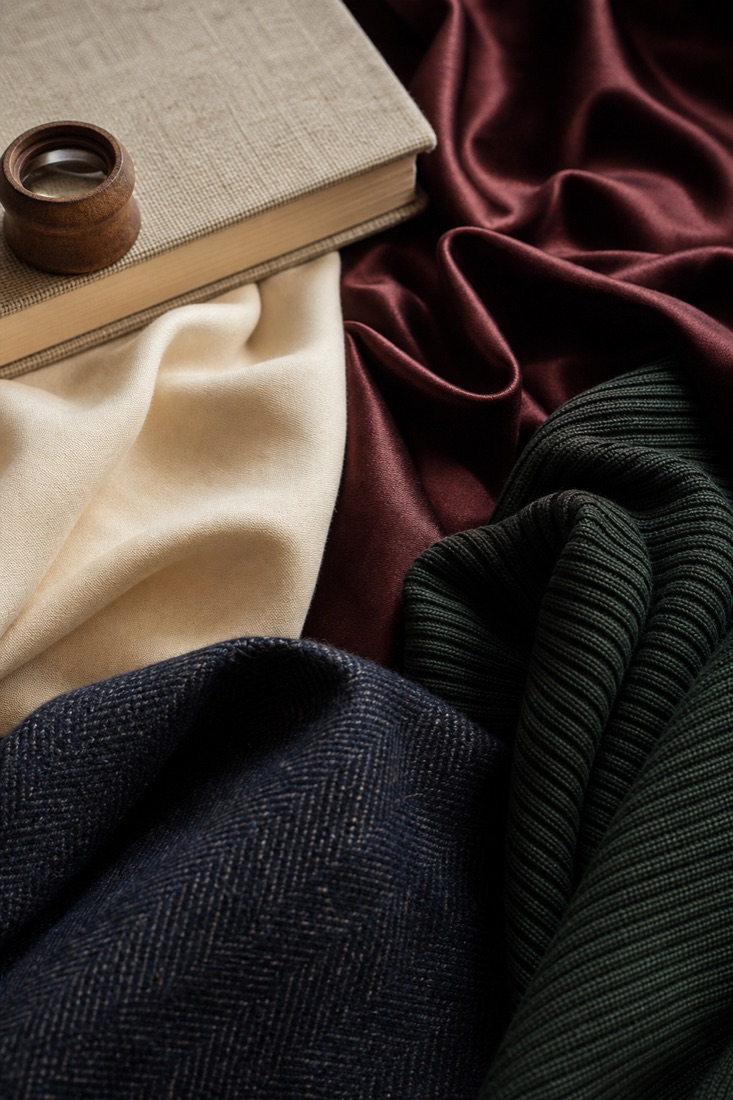
Use six layers to describe a fabric
Start with fiber, then identify yarn character, fabric structure, weight or density, applied finish, and garment construction. Fiber content is important, but it does not tell you whether cotton was woven into crisp poplin, knitted into soft jersey, brushed for warmth, or blended and coated for a specific function.
Record observations rather than declaring a fabric “good.” Does light pass through? Does the surface snag? Does a squeezed area recover or retain a crease? Does the fabric stretch, and does it return? Does the lining move independently? Those answers can be matched to a use such as travel, summer work, close-fitting knitwear, or a structured jacket.
| Entity | Attribute | Observable value | Meaning in context |
|---|---|---|---|
| Fiber | Composition | Label percentages | Ingredient clue, not complete behavior |
| Yarn | Texture | Smooth, fuzzy, tightly or loosely spun | Surface, pilling, warmth, visual character |
| Structure | Formation | Woven or knitted; dense or open | Stretch, stability, airflow, drape |
| Weight | Body | Light, medium, heavy for category | Opacity, layering, structure |
| Finish | Treatment | Brushed, coated, wrinkle-resistant, washed | Changes hand, appearance, or care |
| Garment | Construction | Seams, lining, interfacing, closures | Controls durability and final shape |
Read fiber as a set of tendencies
University of Georgia Extension groups natural plant fibers such as cotton and linen, animal fibers such as wool and silk, manufactured cellulosic fibers such as rayon, and manufactured chemical fibers such as polyester and nylon. These groups have useful tendencies, but a finished garment can amplify or moderate them through blend, yarn, structure, and finish.
Blends are not automatically a compromise. Extension guidance notes that combining fibers can add desired characteristics that one fiber alone does not provide. The relevant question is which performance the blend is trying to achieve: moisture absorption, strength, stretch, wrinkle recovery, abrasion resistance, drape, or easier care. Compare that purpose with your wardrobe role and skin comfort.
A percentage also does not reveal quality of input, yarn evenness, fabric density, dye stability, or sewing. Inspect the physical item and read the care label. If a seller makes a performance claim, look for specific construction or tested evidence rather than relying on a fiber name as shorthand.
Run five gentle in-store tests
Non-destructive fabric sequence
- Light: hold one layer toward light to inspect opacity and weave or knit openness.
- Recovery: squeeze a small section briefly, release it, and observe crease recovery without damaging the item.
- Stretch: test gently along and across the grain; observe whether shape returns.
- Surface: inspect high-friction zones and lightly brush the surface for loose fibers or snag sensitivity.
- Drape: let the garment hang, then move it to see whether it falls, clings, or holds a structured line.
Match each result to use. A crisp crease may be welcome in a tailored shirt and frustrating in travel trousers. A fluid fabric may suit a soft skirt but fail to hold a sharply structured pocket. Stretch without recovery can produce bagging at knees and elbows. An open structure can feel airy while requiring a layer for opacity.
Ingredients
Knit, weave, density
Surface and treatment
Climate, movement, care
Inspect finish and construction together
A finish may create softness, water resistance, crease resistance, sheen, or texture. Ask how it changes care and how it may change with wear. Look at seam allowances, stitch consistency, stress points, button attachment, zipper installation, lining, and interfacing. Expensive details are not automatically necessary; the construction must support the garment’s expected load and shape.
At a patterned seam, alignment may indicate careful cutting, but its importance depends on design and price. At a pocket opening, bartacks or reinforcement can matter more. For a close-fitting knit, seam stretch and recovery are critical. For a lined jacket, check whether the lining pulls or twists when the garment moves.
Match attributes to a concrete role
Create a short brief before comparing fabrics: “summer office trouser, seated most of the day, opaque in daylight, comfortable with walking, washable at home, little ironing.” Then score candidate fabrics against those attributes. A fabric can be excellent for one brief and poor for another without being universally high or low quality.
| Candidate | Structure | Observed behavior | Care | Decision |
|---|---|---|---|---|
| Light plain weave | Stable, slightly open | Airy, creases, needs opacity check | Read item label | Good only with acceptable lining or density |
| Dense twill blend | Stable diagonal weave | More body, good recovery, warmer | Read item label | Useful for structured frequent wear |
| Fluid knit | Stretch structure | Drapes and moves; recovery must be tested | May require shape-aware drying | Useful if seat and knee recover after movement |
Do not override the manufacturer’s care instruction based on a general fiber chart. The label applies to the complete garment, including dyes, trims, lining, and construction.
Sources and further reading
These references support the standards and factual claims in this guide. The decision frameworks and worked examples are original editorial synthesis.
Questions practitioners ask
Is a higher percentage of natural fiber always higher quality?
No. Quality depends on the intended use and the complete fabric and garment system. Natural and manufactured fibers have different useful properties, and blends can combine them.
Can touch identify fiber content reliably?
Touch can reveal surface and structure, but finishes and blends can imitate familiar sensations. Use the fiber label as the ingredient record and inspect behavior separately.
What does fabric weight tell me?
Weight influences warmth, opacity, drape, and structure, but the same weight can behave differently in a dense weave, open weave, stable knit, or stretchy knit.